100% Waterproof Flooring: What You Should Know About SPC and LVT
100% waterproof is one of the most misunderstood claims in flooring. Here's what it actually means for SPC and LVT — and why the plank's core, not just the surface, is what makes the difference.
Admin
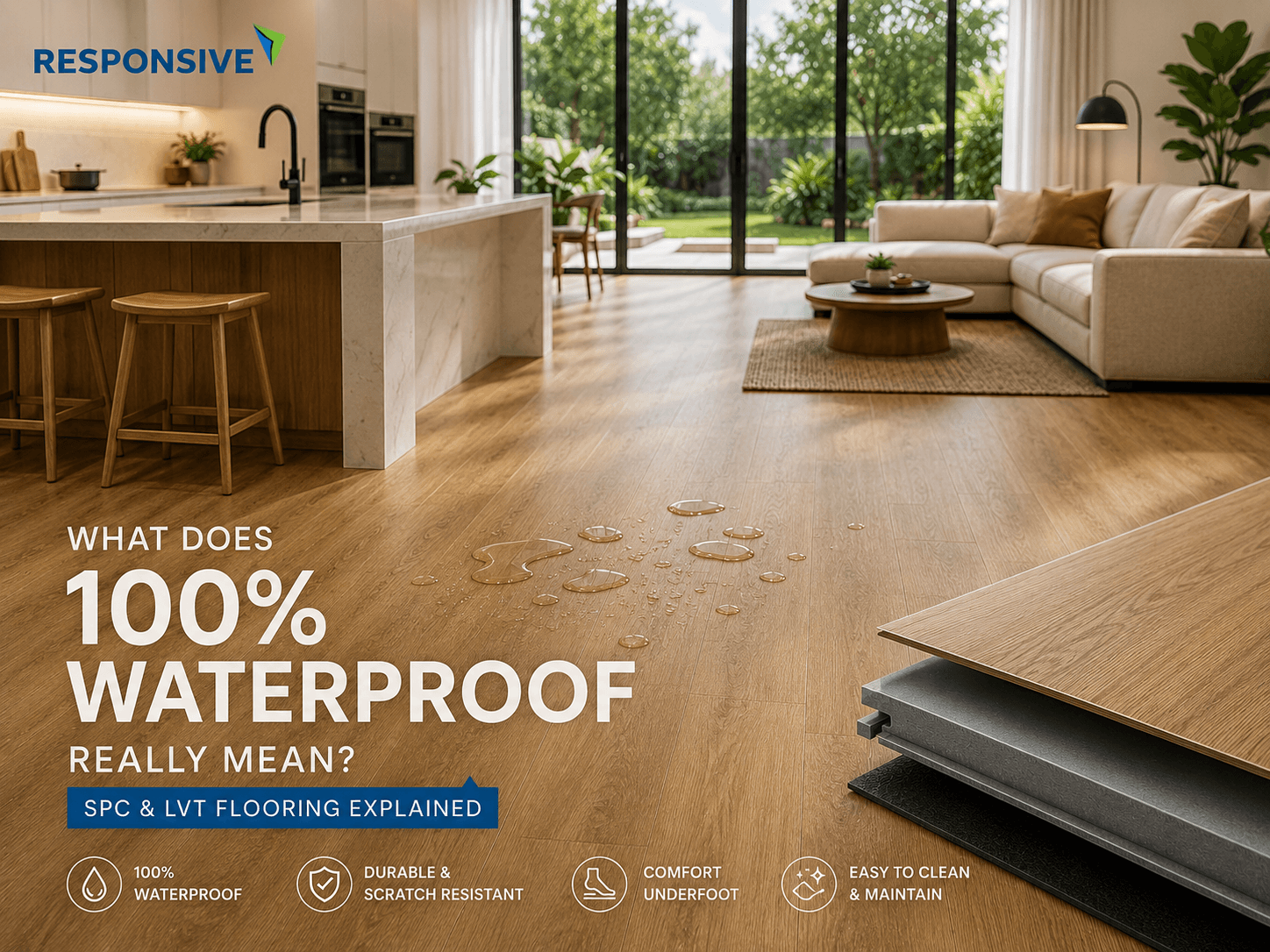
If you've shopped for flooring recently, you've probably seen the phrase "100% waterproof" attached to SPC and LVT products. It's a bold claim — and a confusing one, because most buyers aren't sure whether it means the plank is waterproof, or the entire installed floor is waterproof. The distinction matters, and understanding it will help you choose (or sell) the right product with confidence.
What 100% Waterproof Actually Means
When SPC or LVT is described as 100% waterproof, the claim refers to the plank itself — not the finished floor as a system. Because the core material is non-porous, it won't absorb water, swell, warp, or lose structural integrity if it gets wet or is briefly submerged. That's a genuine, testable property of the material.
What it doesn't automatically guarantee is that water can never reach the subfloor. Gaps at joints, walls, or fixtures can still let moisture through if the installation isn't done properly. So "waterproof plank" and "waterproof floor system" are related but not identical ideas — and it's worth knowing the difference before you buy or specify a product.
 Why SPC Holds Up So Well
SPC stands for Stone Plastic Composite. Its core is made from limestone powder blended with polymer resins, which creates a dense, rigid plank that:
Resists swelling, warping, and delamination from water exposure
Stays dimensionally stable across temperature and humidity swings
Handles dents and impacts better than softer flooring materials
Has no organic wood content, so there's nothing for mold or mildew to feed on
This combination is why SPC has become a go-to choice for bathrooms, kitchens, basements, and commercial spaces where moisture is a constant factor.
Where LVT Fits In
LVT (Luxury Vinyl Tile) shares the same waterproof logic but takes a different form. Instead of planks that mimic wood, LVT is typically cut into tile shapes that replicate natural stone or ceramic — grout lines included. Its core is built from compressed vinyl layers that are just as impervious to water as SPC.
The practical difference comes down to look and application: LVT tends to suit spaces where a tiled aesthetic is preferred, while SPC (often in plank form) leans toward a wood-look finish. Both deliver the same core benefit — a plank that won't be damaged by water.
Installation Still Matters
Even with a fully waterproof core, the overall performance of a floor depends on how it's installed. Two things make a real difference:
- Locking system quality — A well-engineered click-lock system keeps planks tightly joined, minimizing gaps where water could seep through.
- Edge sealing — Applying sealant (like silicone) around the room's perimeter, especially near walls, tubs, and fixtures, adds an extra layer of protection for the subfloor.
Neither of these changes the waterproof nature of the plank — but together, they help ensure the installed system performs as well as the material itself promises.
 The Value Case: Durability and Warranty
Waterproof SPC and LVT flooring typically comes with stronger warranties than conventional alternatives — often 20+ years or lifetime residential coverage. That's not a coincidence. A core that resists water damage naturally means:
Fewer callbacks and warranty claims
Longer floor lifespan with less risk of costly replacement
Confidence for high-moisture spaces like kitchens, bathrooms, and basements
For homeowners, that translates to peace of mind. For distributors and specifiers, it translates to fewer complaints and stronger customer trust.
The Bottom Line
"100% waterproof" for SPC and LVT is a real, testable claim about the plank's core material — not a marketing exaggeration. Both materials are inherently non-porous and resistant to swelling, warping, and mold growth. But getting the full benefit of that waterproof core still depends on quality manufacturing, a well-designed locking system, and correct installation with proper edge sealing.
At Responsive Industries, our SPC and LVT ranges are engineered with this full picture in mind — from core composition to click-lock precision — so the waterproof promise holds up in real-world conditions, not just on paper.
This article is for general informational purposes. For product-specific specifications, wear layer thickness, and installation guidelines, please consult our technical datasheets.
Written by
Admin
Expert in flooring solutions with years of experience in the industry. Passionate about helping homeowners make informed decisions.